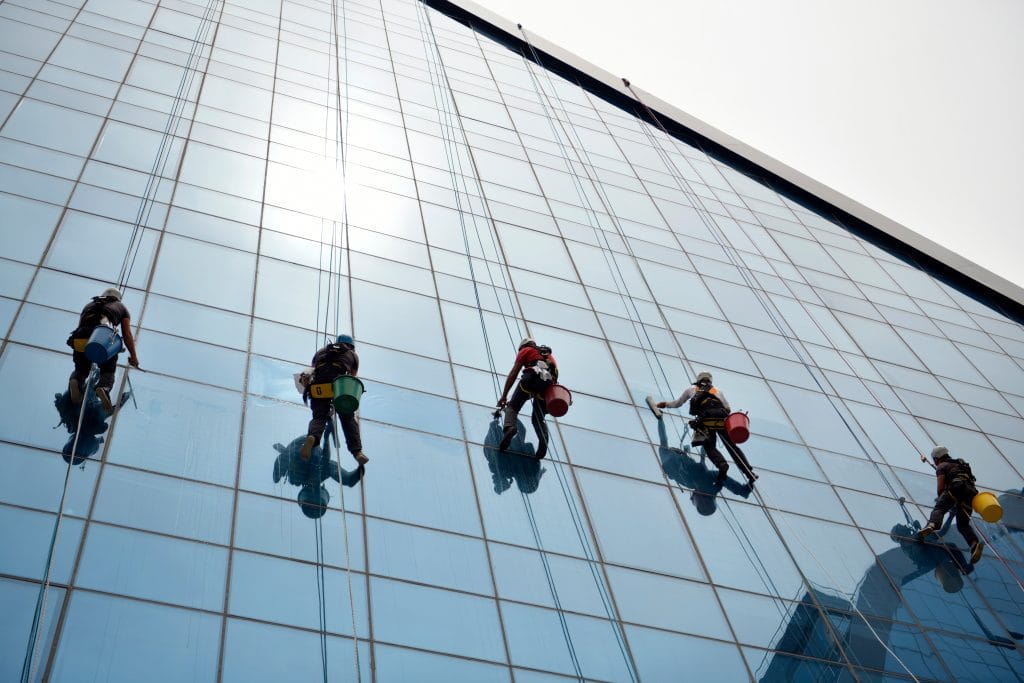
High altitude work used to mean heavy iron frames and massive setups that blocked the view and scared passersby. Today, technicians use slim lines and specialized gear to glide down structures with total ease and complete security.
This approach keeps team members safe while keeping costs low for building managers. When structural upkeep demands accuracy, many properties rely on rope access cleaning services to achieve spotless glass safely.
Zero dropped objects:
Technicians attach every single tool to a body harness using strong lanyards. This basic rule keeps wrenches, brushes, and buckets from falling to the ground below. Passersby can walk under the work zone without any fear of accidents. The ground stays clear, and the team works with peace of mind.
Double safety lines:
Every technician hooks onto two separate ropes at all times. One line supports the worker during daily tasks, while the second line acts as a backup defense. If the main line fails, the secondary system stops a fall instantly. This backup design makes serious accidents nearly impossible.
Strict team supervision:
Workers never operate alone on a structure. Teams include a dedicated safety leader who watches every movement from the top or ground level. This supervisor checks every knot, anchor, and harness before anyone leaves the roof. Continuous oversight stops mistakes before they can even happen.
Rigorous training rules:
People must pass tough physical and mental tests before they can work on a line. Training centers teach rescue methods, gear inspection, and wind assessment over many days. Workers must renew their licenses regularly to prove they still hold top skills. Only true professionals get to work on these ropes.
Fast evacuation plans:
If the weather changes quickly, workers can return to the ground in seconds. Unlike heavy scaffolding that takes days to dismantle, ropes pack away into small bags immediately. Teams can leave a building surface faster than any other high-altitude work crew. Speed keeps everyone away from sudden storm dangers.
Regular gear checks:
Every piece of nylon rope and metal carabiner gets a close look before and after a shift. Technicians look for small cuts, loose threads, or bent metal parts. If a piece of gear shows any wear, the team throws it away immediately. Fresh equipment keeps the safety record clean year after year.




More Stories
Handling Common Charging Issues With Rechargeable Elf Bars
Integrating Soft Skills Training into Technical Curriculums
5 Ways To Finance Your Property Development Project